GEORGE MORL
💪 WORK 📙 FILES
💪 EXHIBITIONS
📙BOOKS
🌍 NEWS 🔬 ABOUT
😲 CV 😗 CONTACT
The Diary Of An Artworker
Uploading...2026
For five years, I explored how technology, identity, and autistic masking helped me navigate a career in the arts.
Voyager 2000: Worldbeing & Wonder?, presented this as an introduction exhibition. It was a summary story of strategy, vulnerability, sharing life stories and platform with others, but what is the personal impact of this visibility.
Audiences responded in ways I hadn’t anticipated: online, in person, publicly, privately.
‘THE DIARY OF AN ARTWORKER’, is a visual story reflecting on access, identity, desire, status, and how we negotiate selfhood within cultural systems. What are the effects of sharing your life, while working within spaces, communities, and human networks you’re also questioning.
Continue to explore the visuals and read the text from the slides.
Voyager 2000: Worldbeing & Wonder?, presented this as an introduction exhibition. It was a summary story of strategy, vulnerability, sharing life stories and platform with others, but what is the personal impact of this visibility.
Audiences responded in ways I hadn’t anticipated: online, in person, publicly, privately.
‘THE DIARY OF AN ARTWORKER’, is a visual story reflecting on access, identity, desire, status, and how we negotiate selfhood within cultural systems. What are the effects of sharing your life, while working within spaces, communities, and human networks you’re also questioning.
Continue to explore the visuals and read the text from the slides.





The Diary Of An Artworker
(The Text)
Slide 1: The Diary Of An Artworker
Did Tech, Exploring Identity &
Autistic Masking Help Me In The Arts?
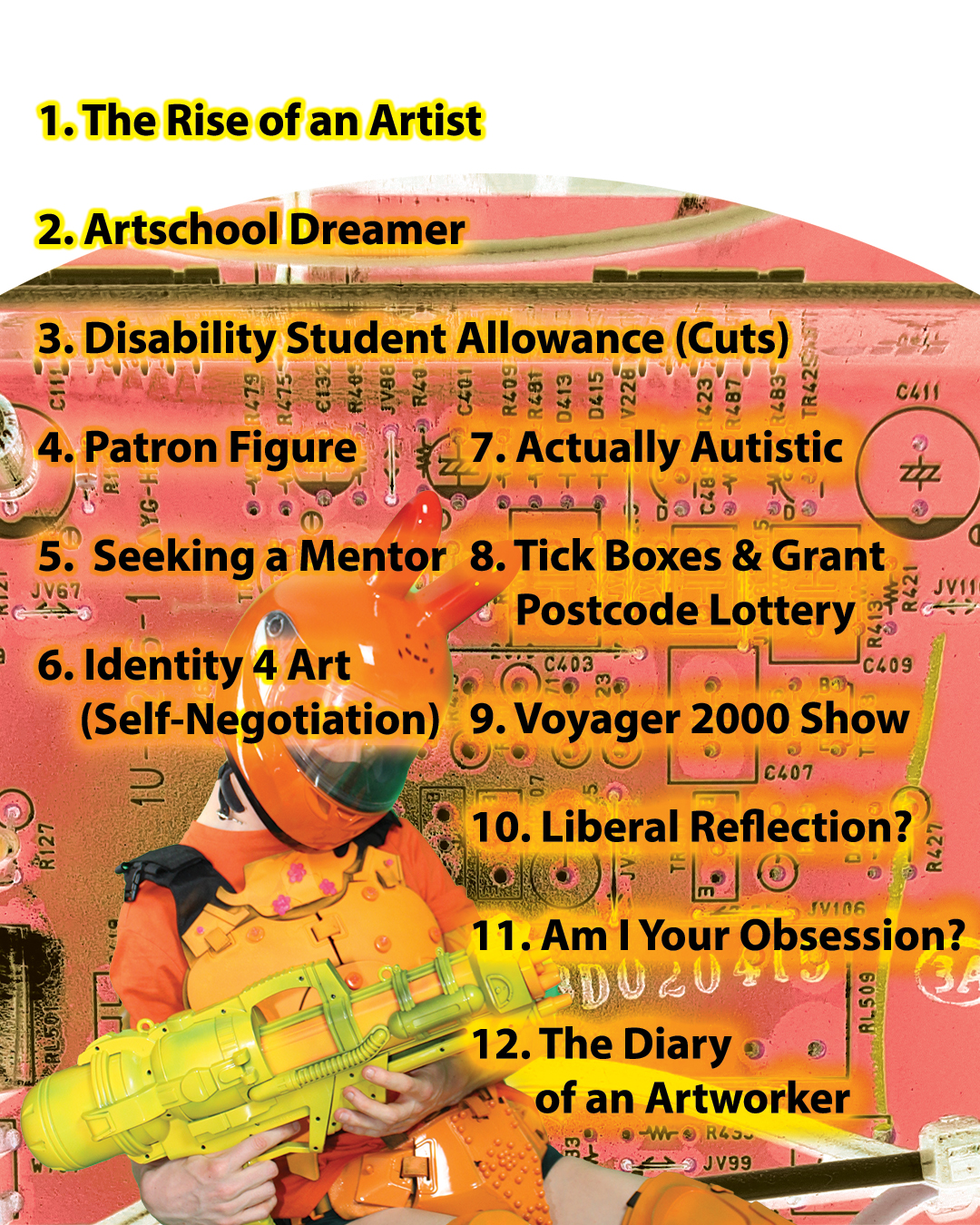
Slide 2: Track List [Contents Page]
1. The Rise of an Artist
2. Artschool Dreamer
3. Disability Student Allowance (Cuts)
4. Patron Figure
5. Seeking a Mentor
6. Identity 4 Art (Self-Negotiation)
7. Actually Autistic
8. Tick Boxes & Grant Postcode Lottery
9. Voyager 2000 Show
10. Liberal Reflection?
11. Am I Your Obsession?
12. The Diary of an Artworker
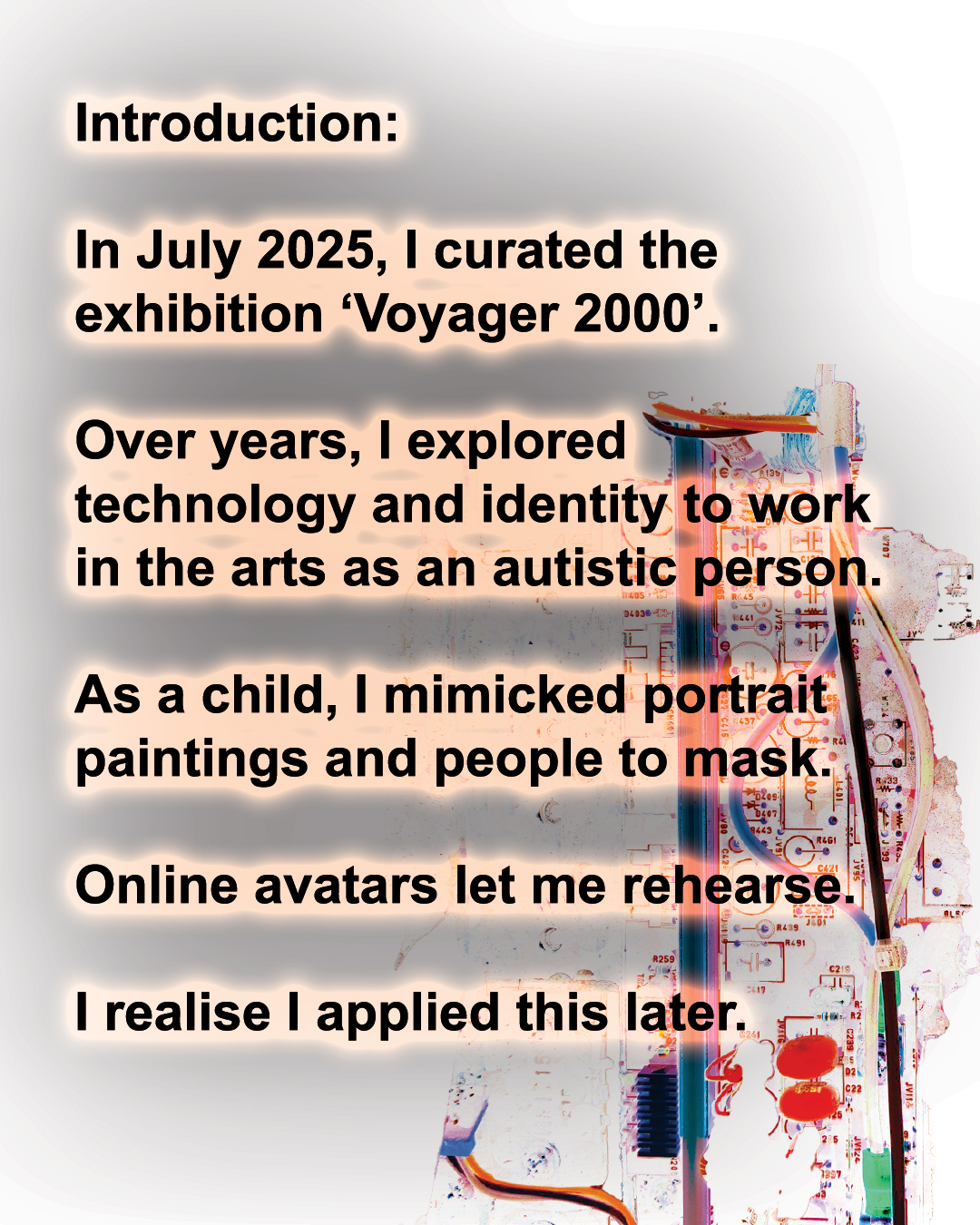
Slide 3: Introduction
In July 2025, I curated the exhibition ‘Voyager 2000’.
Over years, I explored technology and identity to work in the arts as an autistic person.
As a child, I mimicked portrait paintings and people to mask.
Online avatars let me rehearse.
I realise I applied this later.
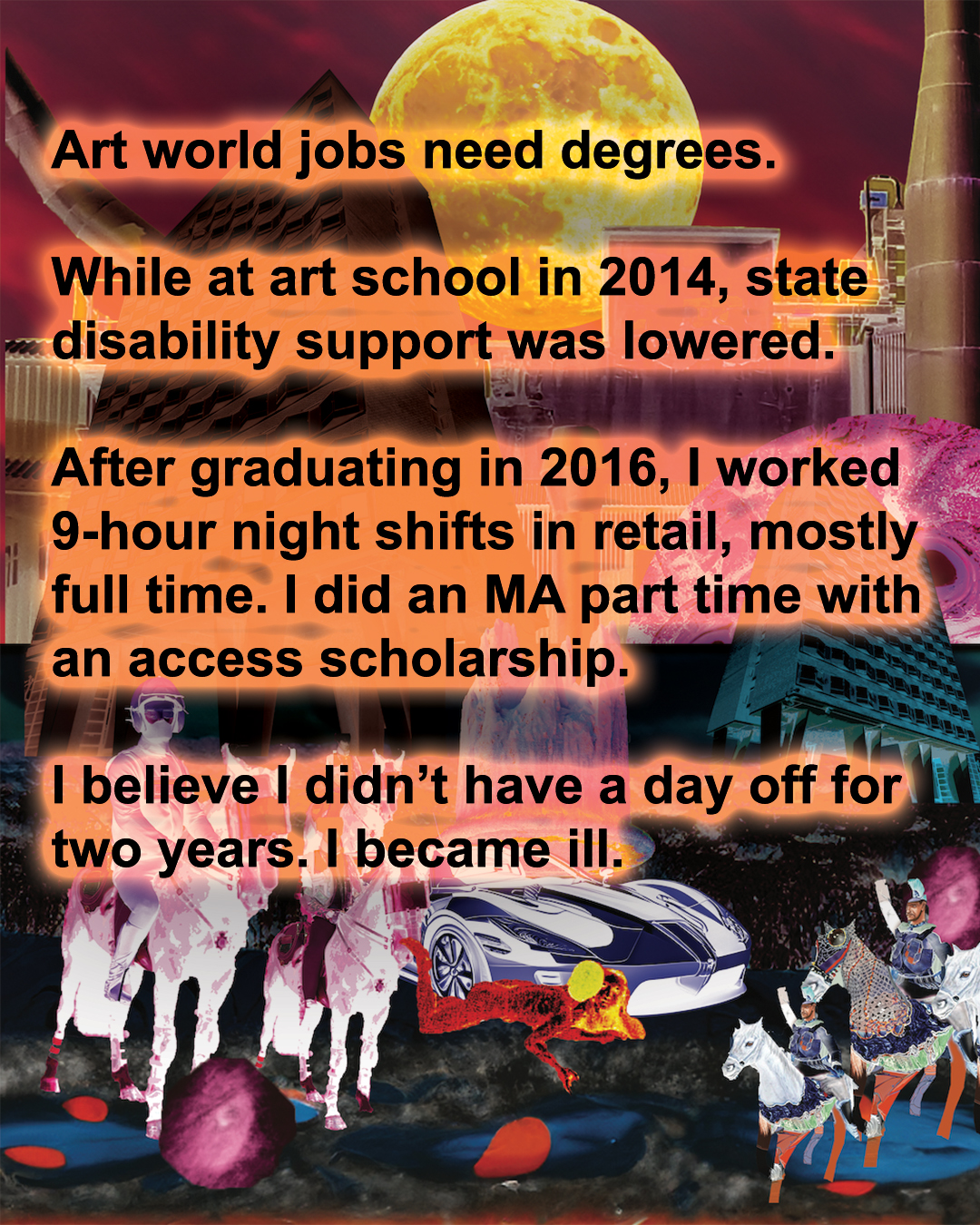
Slide 4: Early Barriers
Art world jobs need degrees.
While at art school in 2014, state disability support was lowered.
After graduating in 2016, I worked 9-hour night shifts in retail, mostly full time. I did an MA part time with an access scholarship.
I believe I didn’t have a day off for two years. I became ill.
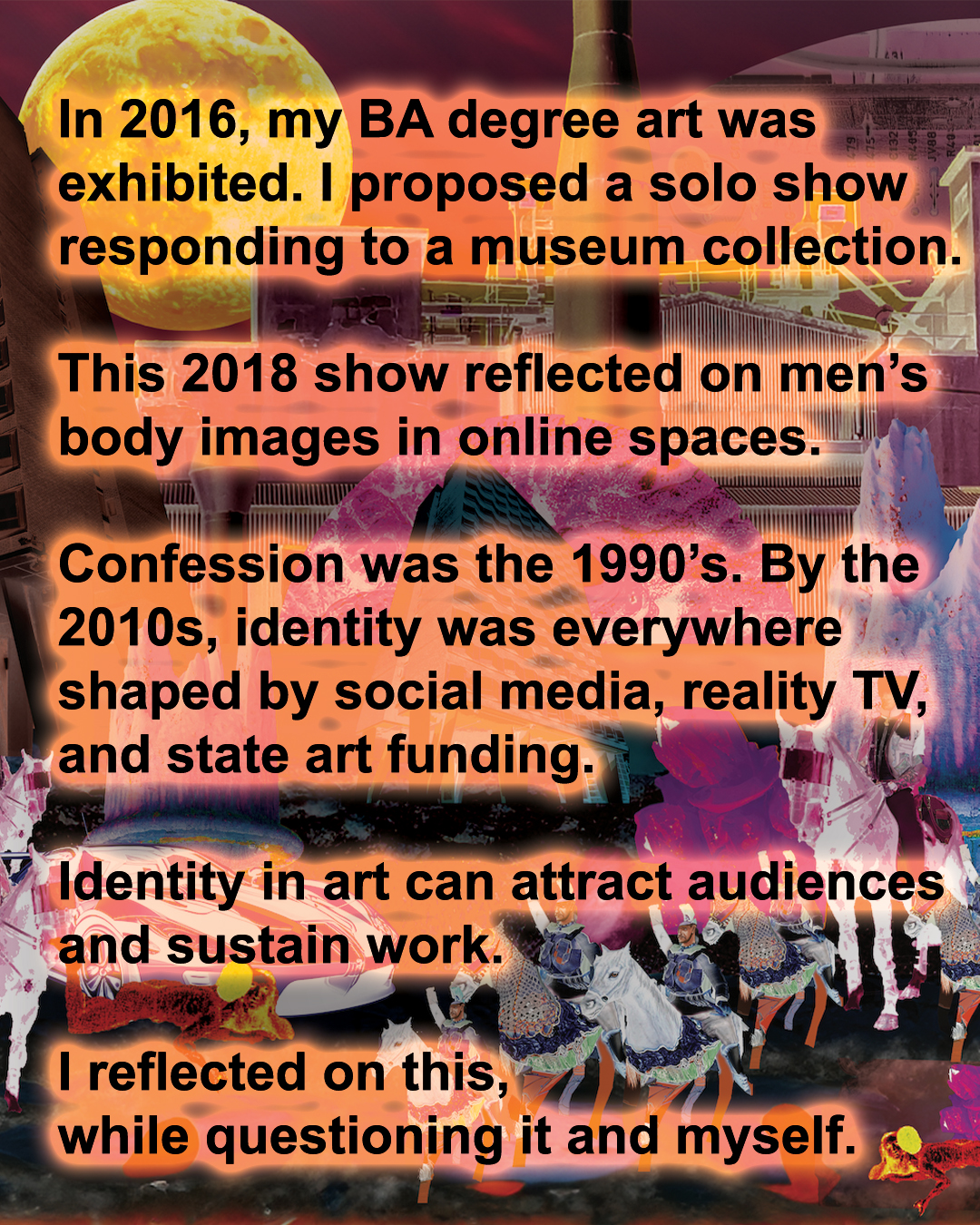
Slide 5: First Exhibition
In 2016, my BA degree art was exhibited. I proposed a solo show responding to a museum collection.
This 2018 show reflected on men’s body images in online spaces.
Confession was the 1990’s. By the 2010s, identity was everywhere shaped by social media, reality TV, and state art funding.
Identity in art can attract audiences and sustain work.
I reflected on this, while questioning it and myself.
Slide 6: Strategy Pivot
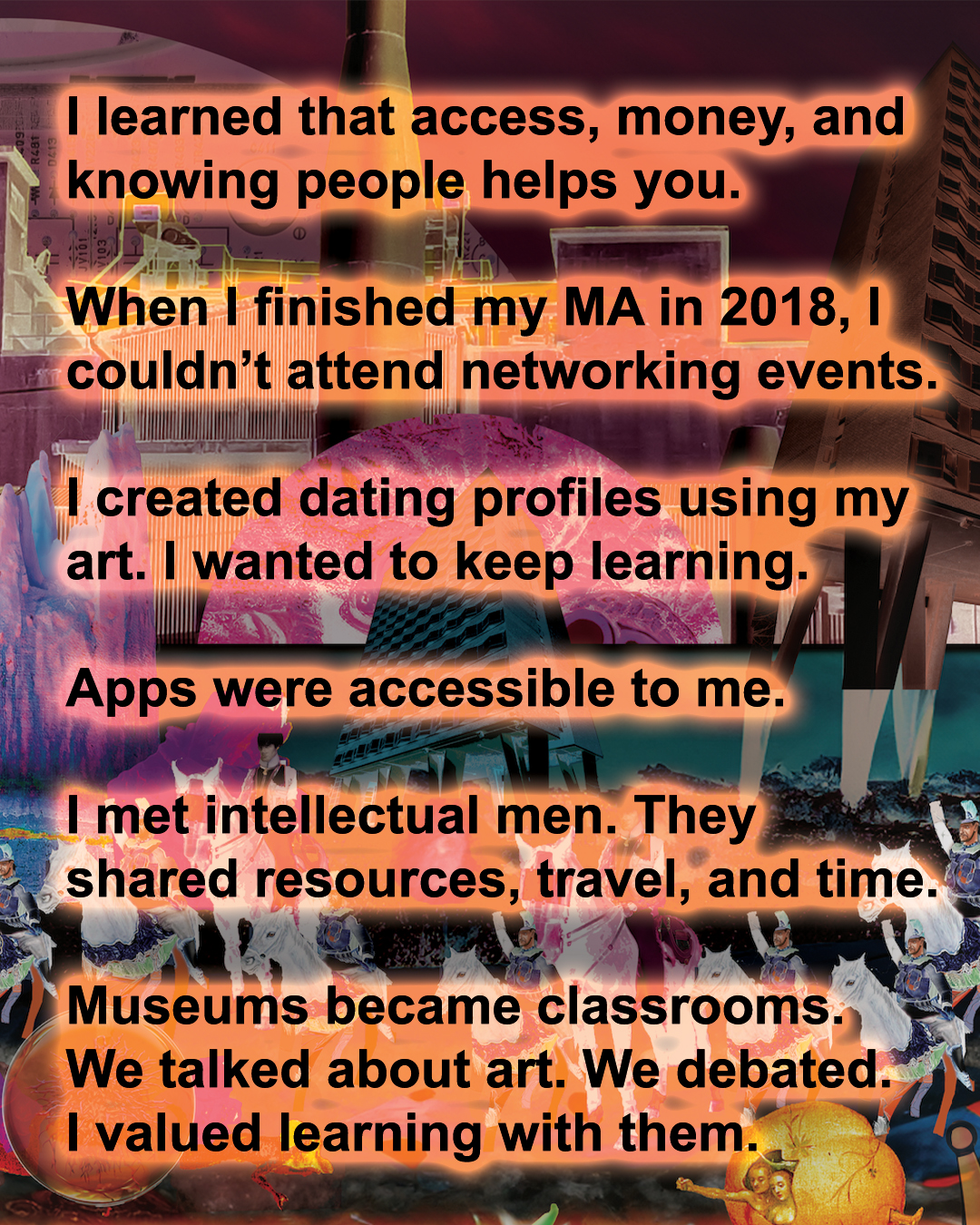
I learned that access, money, and knowing people helps you.
When I finished my MA in 2018, I couldn’t attend networking events.
I created dating profiles using my art. I wanted to keep learning.
Apps were accessible to me.
I met intellectual men. They shared resources, travel, and time.
Museums became classrooms.
We talked about art. We debated.
I valued learning with them.
Slide 7: Early Career Moves
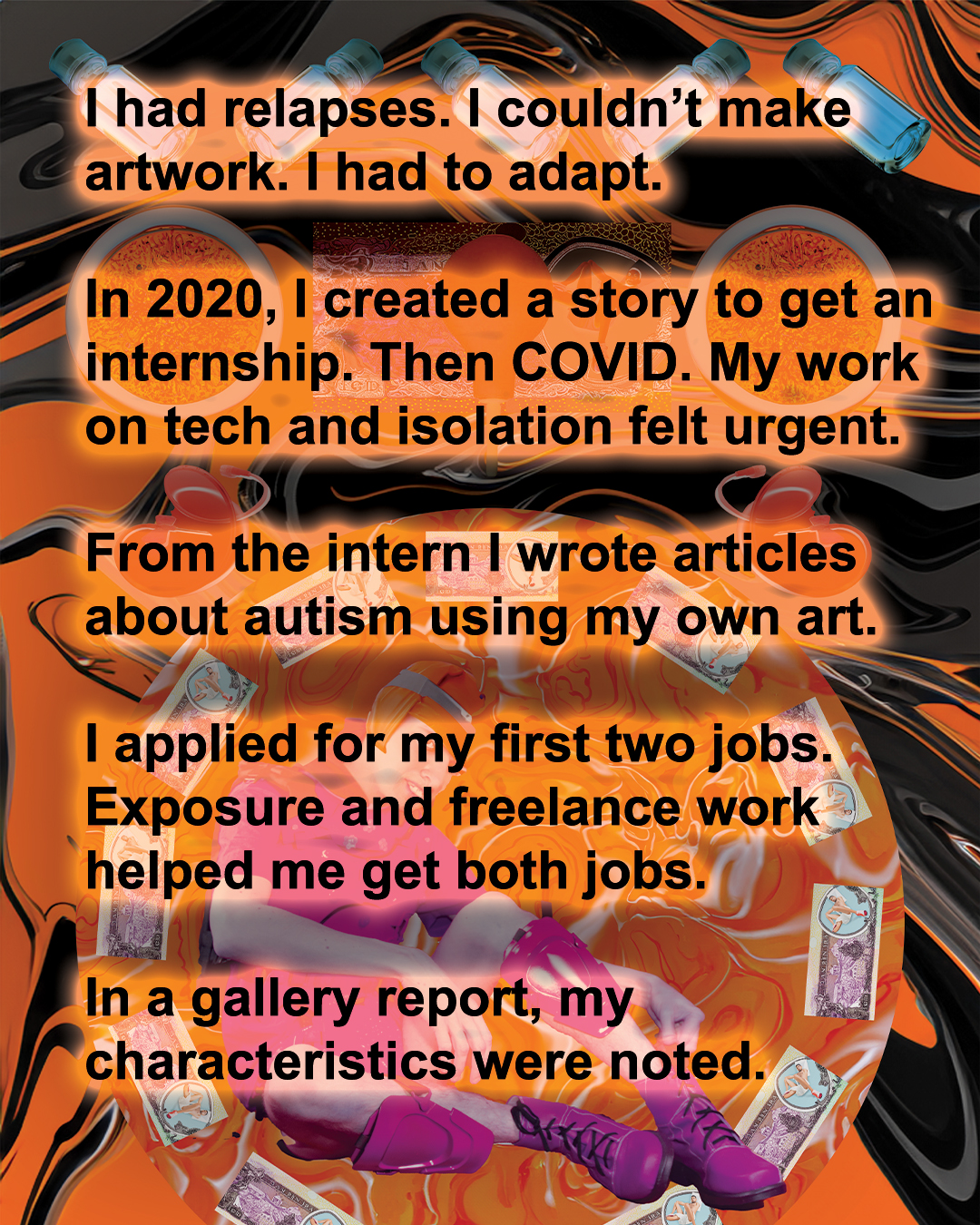
I had relapses. I couldn’t make artwork. I had to adapt.
In 2020, I created a story to get an internship. Then COVID. My work on tech and isolation felt urgent.
From the intern I wrote articles about autism using my own art.
I applied for my first two jobs. Exposure and freelance work helped me get both jobs.
In a gallery report, my characteristics were noted.
Slide 8: Expanding Practice
I began sharing my research across other projects. It saved time and increased impact.
I used my artist fee to buy art and built a mobile sensory gallery. I did school workshops for free.
I started being approached for my characteristics. I shared those commissions with others.
I got my first Arts Council grant. I asked to look at tech/disability history and learn digital skills.
I then made digital work from bed.
Slide 9: Data + Collaboration
In my main job, I looked at data from relaxed cinema shows.
We changed times and film types. Visits went up by around 130%.
I saw popular themes which we used to inform future exhibitions.
I kept talking with other autistic people. About technology. Accessibility. Art. Politics. Joy.
In support groups. Schools. Online.
Our stories merged. Collaboration continued. This became ‘Voyager’.
Slide 10: Exhibition Approach
The show narrated my use of art and sensory experiences.
Art, performance, and masking were tools I had to use.
The exhibition questioned ‘what’s art’, ‘quality’ and ‘value’.
Work by untrained artists was shown with students.
Access was talked together.
It was built in.
Slide 11: Becoming An Adult
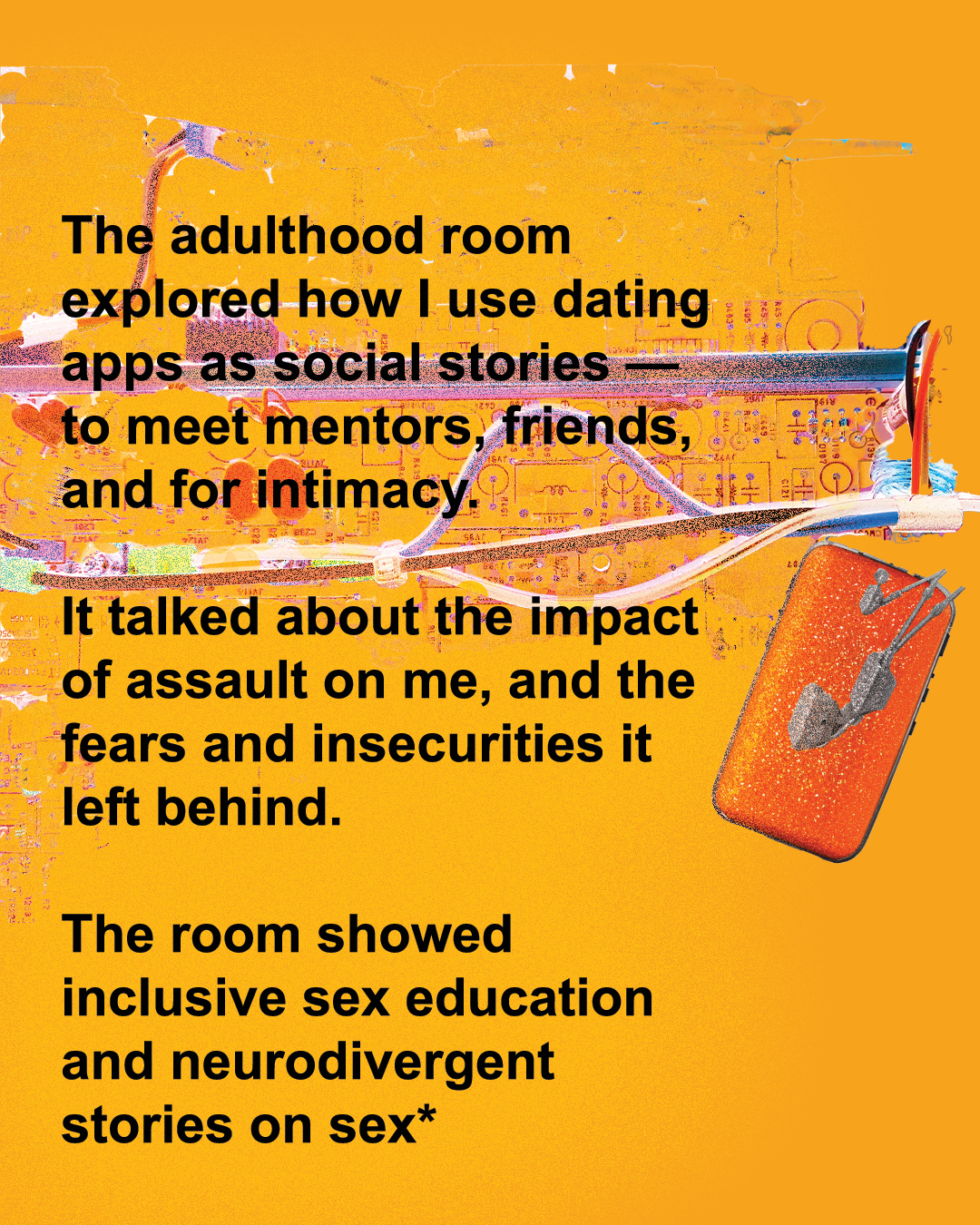
The adulthood room explored how I use dating apps as social stories — to meet mentors, friends, and for intimacy.
It talked about the impact of assault on me, and the fears and insecurities it left behind.
The room showed inclusive sex education and neurodivergent stories on sex*
Slide 12: Communication & Autonomy
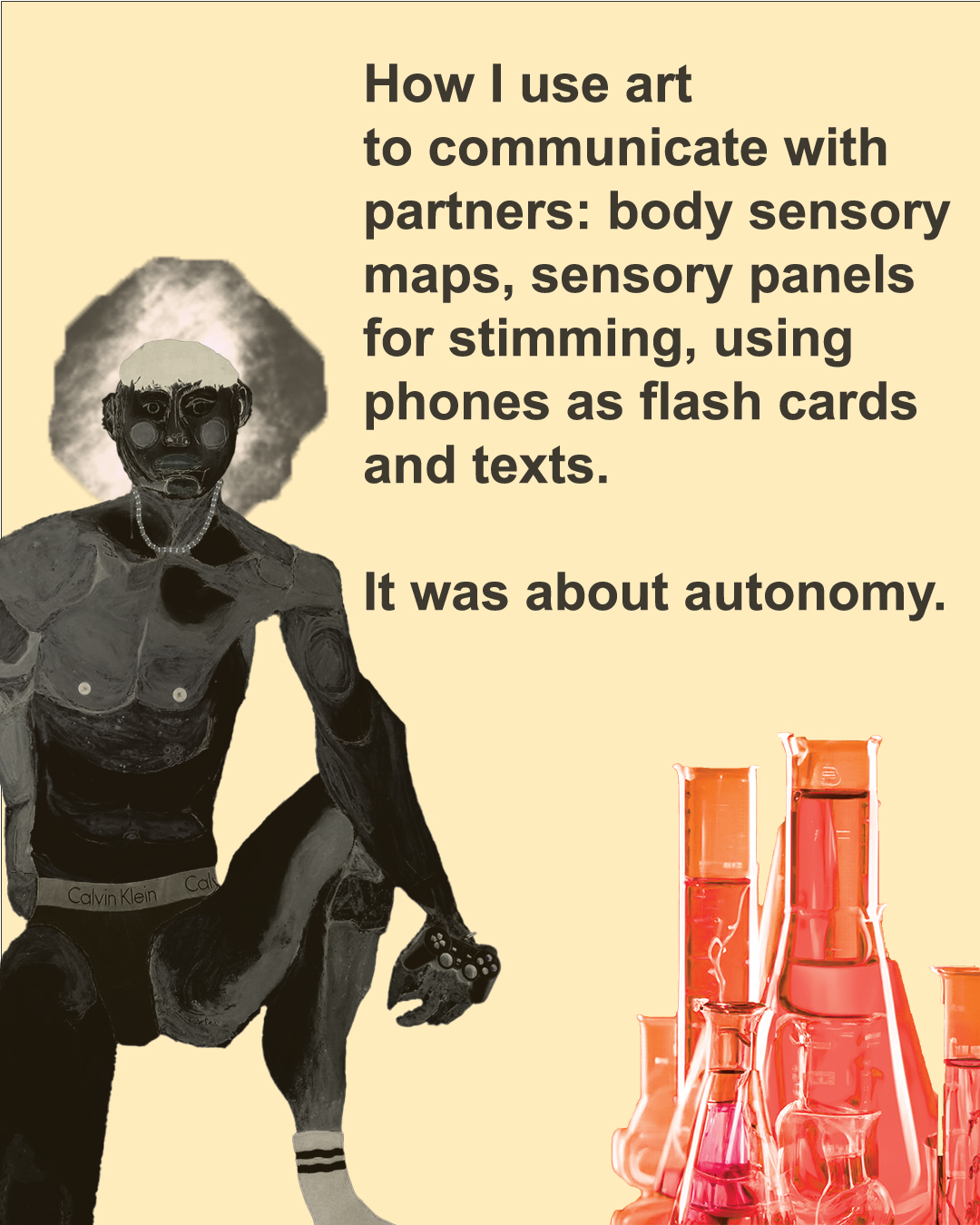
How I use art to communicate with partners: body sensory maps, sensory panels for stimming, using phones as flash cards and texts.
It was about autonomy.
Slide 13: Relationships + Identity
I explored how relationship structures and identity overlap.
How non-monogamy, asexuality, and aromanticism can challenge ideas of desire and what sex may mean for us*.
Slide 14: Identity as Tool?
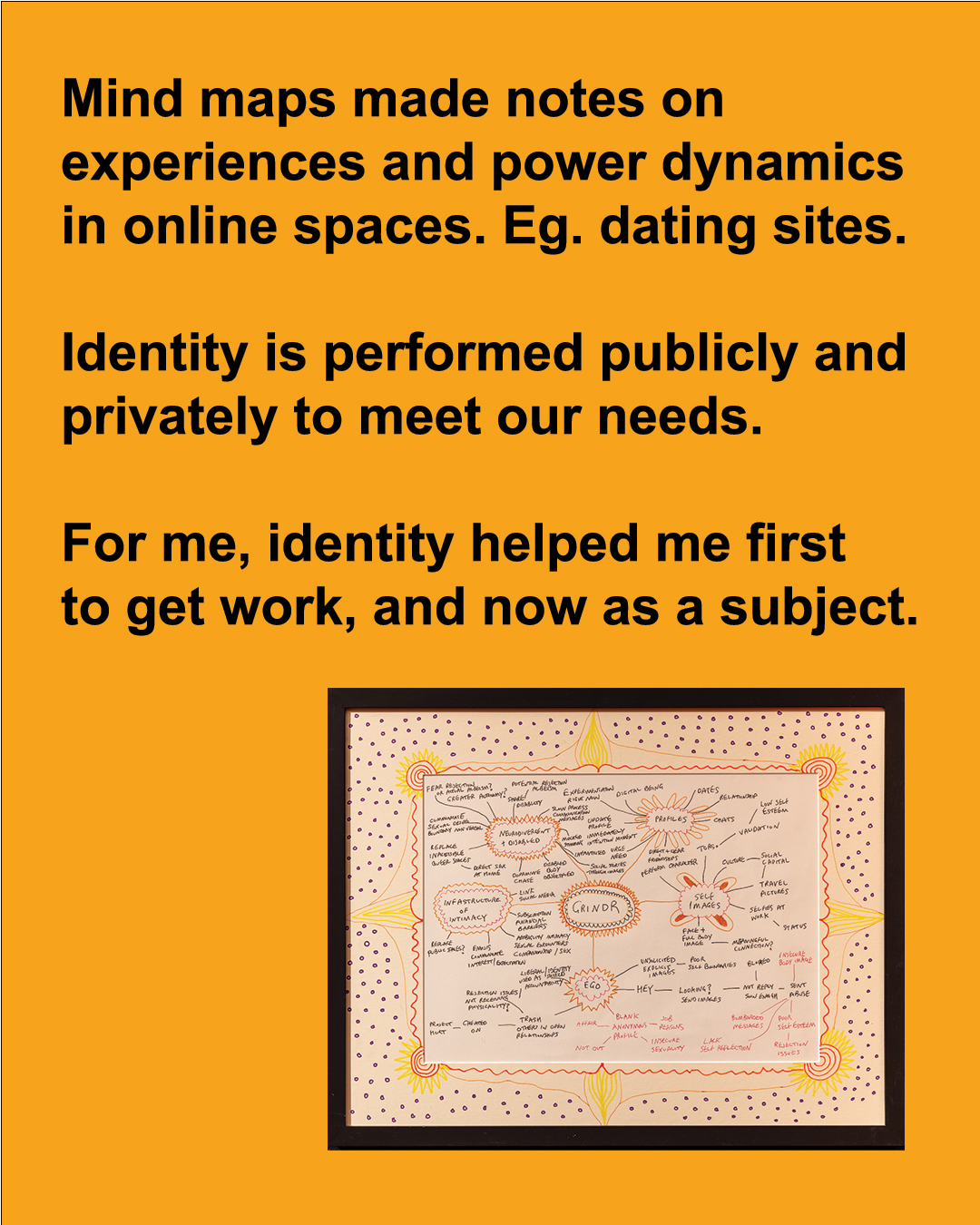
Mind maps made notes on experiences and power dynamics in online spaces. Eg. dating sites.
Identity is performed publicly and privately to meet our needs.
For me, identity helped me first to get work, and now as a subject.
Slide 15: Audience Reach
Around a third of exhibition visitors were neurodivergent, and was among the highest attended by LGBT, d/Deaf, disabled, and young audiences.
Slide 16: Identity Paradox
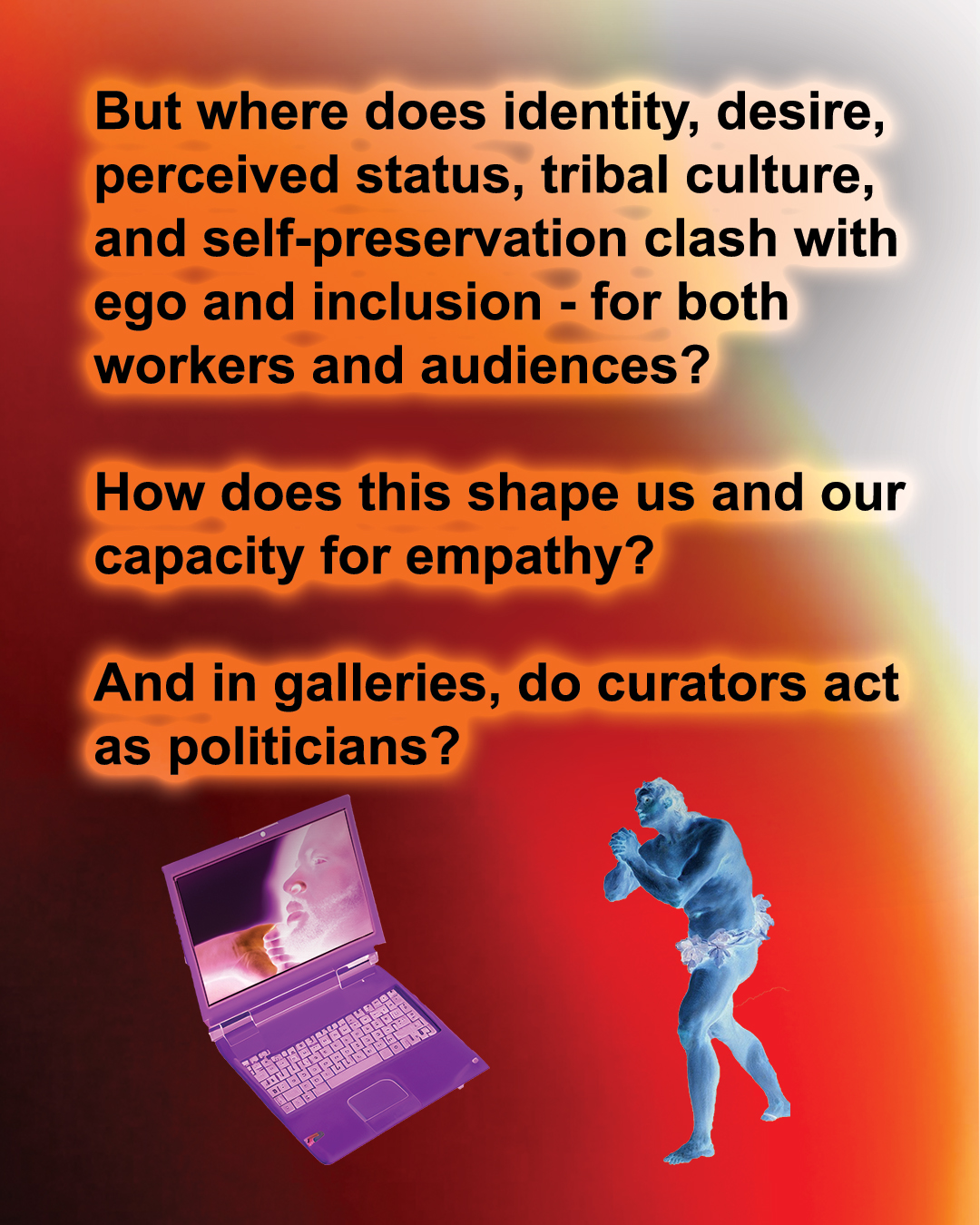
But where does identity, desire, perceived status, tribal culture, and self-preservation clash with ego and inclusion - for both workers and audiences?
How does this shape us and our capacity for empathy?
And in galleries, do curators act as politicians?
Slide 17: Critique + Stakes
I’ve received critique from across the political spectrum.
What happens when my role in the arts blends with public platform and lived experience?
What happens when access to art widens; when identity economy, liberal performance, and ego are reflected back; or when disabled asexual autonomy becomes visible at a time of male loneliness?
A stage was set.
Slide 18: Invisible Responses
Two weeks after opening, responses were private.
I didn’t anticipate, daily visits to one of my dating profile jumping 1600%.
Slide 19: Reactions
People responded — online, in person, in public spaces...
Slide 20: Teaser
The Diary Of An Artworker. Visual Essay. 2026.
(The Text)
Slide 1: The Diary Of An Artworker
Did Tech, Exploring Identity &
Autistic Masking Help Me In The Arts?
Slide 2: Track List [Contents Page]
1. The Rise of an Artist
2. Artschool Dreamer
3. Disability Student Allowance (Cuts)
4. Patron Figure
5. Seeking a Mentor
6. Identity 4 Art (Self-Negotiation)
7. Actually Autistic
8. Tick Boxes & Grant Postcode Lottery
9. Voyager 2000 Show
10. Liberal Reflection?
11. Am I Your Obsession?
12. The Diary of an Artworker
Slide 3: Introduction
In July 2025, I curated the exhibition ‘Voyager 2000’.
Over years, I explored technology and identity to work in the arts as an autistic person.
As a child, I mimicked portrait paintings and people to mask.
Online avatars let me rehearse.
I realise I applied this later.
Slide 4: Early Barriers
Art world jobs need degrees.
While at art school in 2014, state disability support was lowered.
After graduating in 2016, I worked 9-hour night shifts in retail, mostly full time. I did an MA part time with an access scholarship.
I believe I didn’t have a day off for two years. I became ill.
Slide 5: First Exhibition
In 2016, my BA degree art was exhibited. I proposed a solo show responding to a museum collection.
This 2018 show reflected on men’s body images in online spaces.
Confession was the 1990’s. By the 2010s, identity was everywhere shaped by social media, reality TV, and state art funding.
Identity in art can attract audiences and sustain work.
I reflected on this, while questioning it and myself.
Slide 6: Strategy Pivot
I learned that access, money, and knowing people helps you.
When I finished my MA in 2018, I couldn’t attend networking events.
I created dating profiles using my art. I wanted to keep learning.
Apps were accessible to me.
I met intellectual men. They shared resources, travel, and time.
Museums became classrooms.
We talked about art. We debated.
I valued learning with them.
Slide 7: Early Career Moves
I had relapses. I couldn’t make artwork. I had to adapt.
In 2020, I created a story to get an internship. Then COVID. My work on tech and isolation felt urgent.
From the intern I wrote articles about autism using my own art.
I applied for my first two jobs. Exposure and freelance work helped me get both jobs.
In a gallery report, my characteristics were noted.
Slide 8: Expanding Practice
I began sharing my research across other projects. It saved time and increased impact.
I used my artist fee to buy art and built a mobile sensory gallery. I did school workshops for free.
I started being approached for my characteristics. I shared those commissions with others.
I got my first Arts Council grant. I asked to look at tech/disability history and learn digital skills.
I then made digital work from bed.
Slide 9: Data + Collaboration
In my main job, I looked at data from relaxed cinema shows.
We changed times and film types. Visits went up by around 130%.
I saw popular themes which we used to inform future exhibitions.
I kept talking with other autistic people. About technology. Accessibility. Art. Politics. Joy.
In support groups. Schools. Online.
Our stories merged. Collaboration continued. This became ‘Voyager’.
Slide 10: Exhibition Approach
The show narrated my use of art and sensory experiences.
Art, performance, and masking were tools I had to use.
The exhibition questioned ‘what’s art’, ‘quality’ and ‘value’.
Work by untrained artists was shown with students.
Access was talked together.
It was built in.
Slide 11: Becoming An Adult
The adulthood room explored how I use dating apps as social stories — to meet mentors, friends, and for intimacy.
It talked about the impact of assault on me, and the fears and insecurities it left behind.
The room showed inclusive sex education and neurodivergent stories on sex*
Slide 12: Communication & Autonomy
How I use art to communicate with partners: body sensory maps, sensory panels for stimming, using phones as flash cards and texts.
It was about autonomy.
Slide 13: Relationships + Identity
I explored how relationship structures and identity overlap.
How non-monogamy, asexuality, and aromanticism can challenge ideas of desire and what sex may mean for us*.
Slide 14: Identity as Tool?
Mind maps made notes on experiences and power dynamics in online spaces. Eg. dating sites.
Identity is performed publicly and privately to meet our needs.
For me, identity helped me first to get work, and now as a subject.
Slide 15: Audience Reach
Around a third of exhibition visitors were neurodivergent, and was among the highest attended by LGBT, d/Deaf, disabled, and young audiences.
Slide 16: Identity Paradox
But where does identity, desire, perceived status, tribal culture, and self-preservation clash with ego and inclusion - for both workers and audiences?
How does this shape us and our capacity for empathy?
And in galleries, do curators act as politicians?
Slide 17: Critique + Stakes
I’ve received critique from across the political spectrum.
What happens when my role in the arts blends with public platform and lived experience?
What happens when access to art widens; when identity economy, liberal performance, and ego are reflected back; or when disabled asexual autonomy becomes visible at a time of male loneliness?
A stage was set.
Slide 18: Invisible Responses
Two weeks after opening, responses were private.
I didn’t anticipate, daily visits to one of my dating profile jumping 1600%.
Slide 19: Reactions
People responded — online, in person, in public spaces...
Slide 20: Teaser
The Diary Of An Artworker. Visual Essay. 2026.